Three Livable Streets Priorities for the UWS in 2026
Council Members Gale Brewer and Shaun Abreu should get excited about, and get behind, these practical and proven ideas.
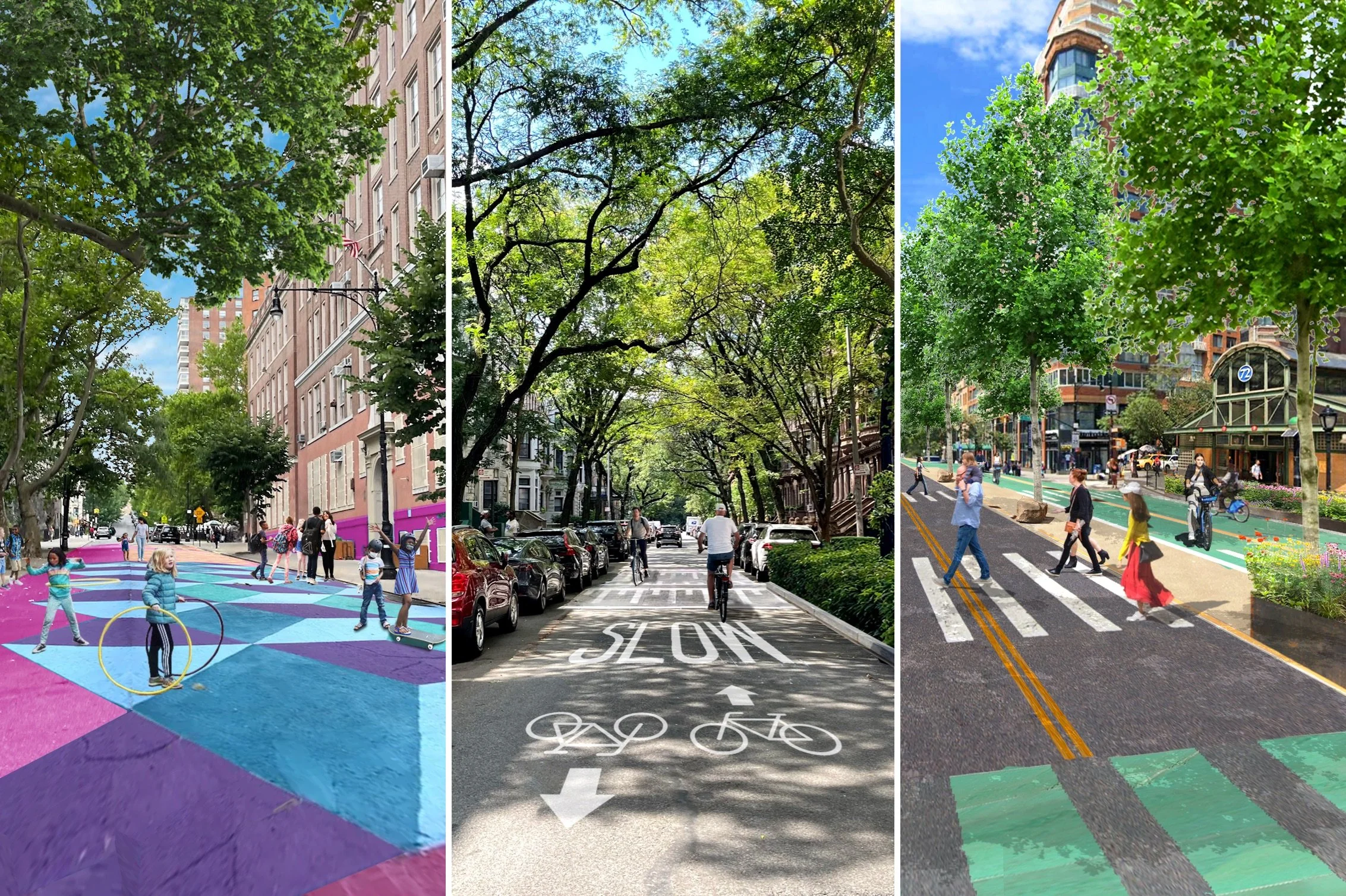
With a new year and new Mayoral Administration, it’s the right time to think big about public space on the Upper West Side. That’s why we’re kicking the year off by offering three ambitious, yet very doable, ideas that would transform how Upper West Siders experience our streets, and each other.
Whether the goal is safety, affordability, or quality of life, changing how we use our streets — prioritizing people over cars — is necessary to get us there. Here are three things we can do today to get us closer to that goal:
SUPPORT KIDS & FAMILIES with School Streets
Creating environments that support the safety and well-being of children should be our top priority. Yet take a look at the streets around our schools and you get another idea. School buses mix with private cars, delivery trucks, and more, creating a dangerous and chaotic mess. Add rows of parked cars to the mix, and it’s easy to see what the real priority is.
School Streets aim to fix that by designating car-free space in front of schools, creating a safe place to socialize, exercise, and just delight in being a kid. Car-free school streets also make it easier and more appealing to get to school by walking and biking, which has a positive impact on kids’ physical and mental health.
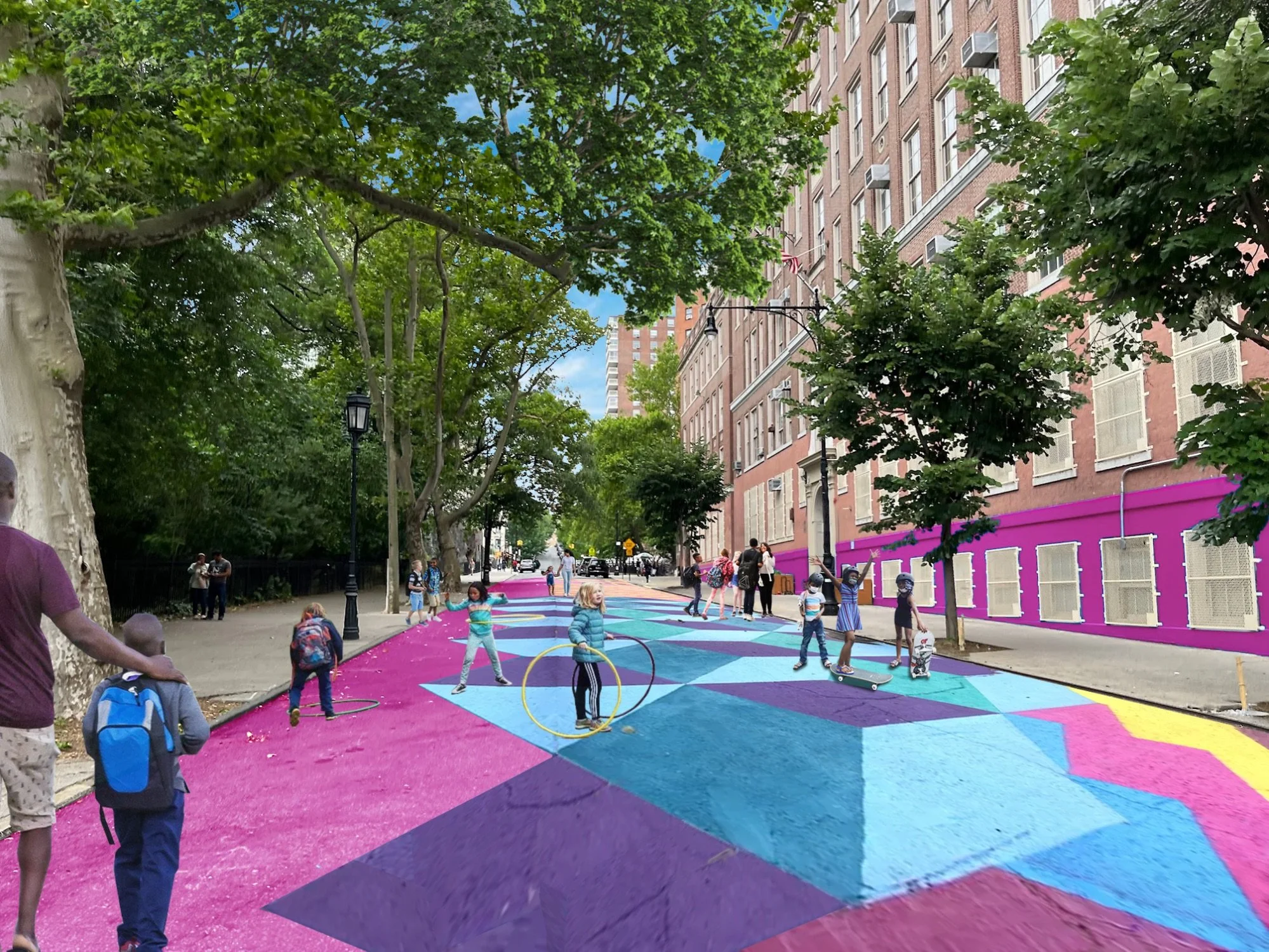
📍 What if all UWS schools looked like this? Illustration: StreetopiaUWS
The Department of Transportation allows schools to apply for a school street under its Open Streets program, but the process is unnecessarily difficult for school administrators already stretched thin. That partly explains why there are no public schools in Community Districts 7 or 9 participating in the Open Streets program, denying thousands of students and their families all those potential benefits.
Political support from Council Members, and practical support their staff, can provide the momentum necessary to help more schools apply and participate in the program. As then-candidate Zohran Mamdani said, “Every street outside of a school should be an Open Street, and my administration will do that.” That’s the spirit! Now let’s help him make it happen.
Start with...
P.S. 125 in Community District 9, and P.S. 87 in Community District 7. Both schools are on narrow, crowded streets with way too many cars, and there are motivated parents ready to organize.
Learn more: School Streets for All
CHANGE THE PARADIGM with Low Traffic Neighborhoods
For too long, our streets have been built primarily to get drivers quickly from A to B, giving motor vehicles the run of the place while pedestrians and cyclists are an afterthought. This has led to a status quo of excessive traffic and all the ills that come from it: noise, pollution, stress, danger, and social isolation for the young and old.
Low Traffic Neighborhoods (LTNs for short) are a way to change the decades-old car-centric paradigm and reverse those ills by shifting the priority of streets to people and community over the movement of vehicles.
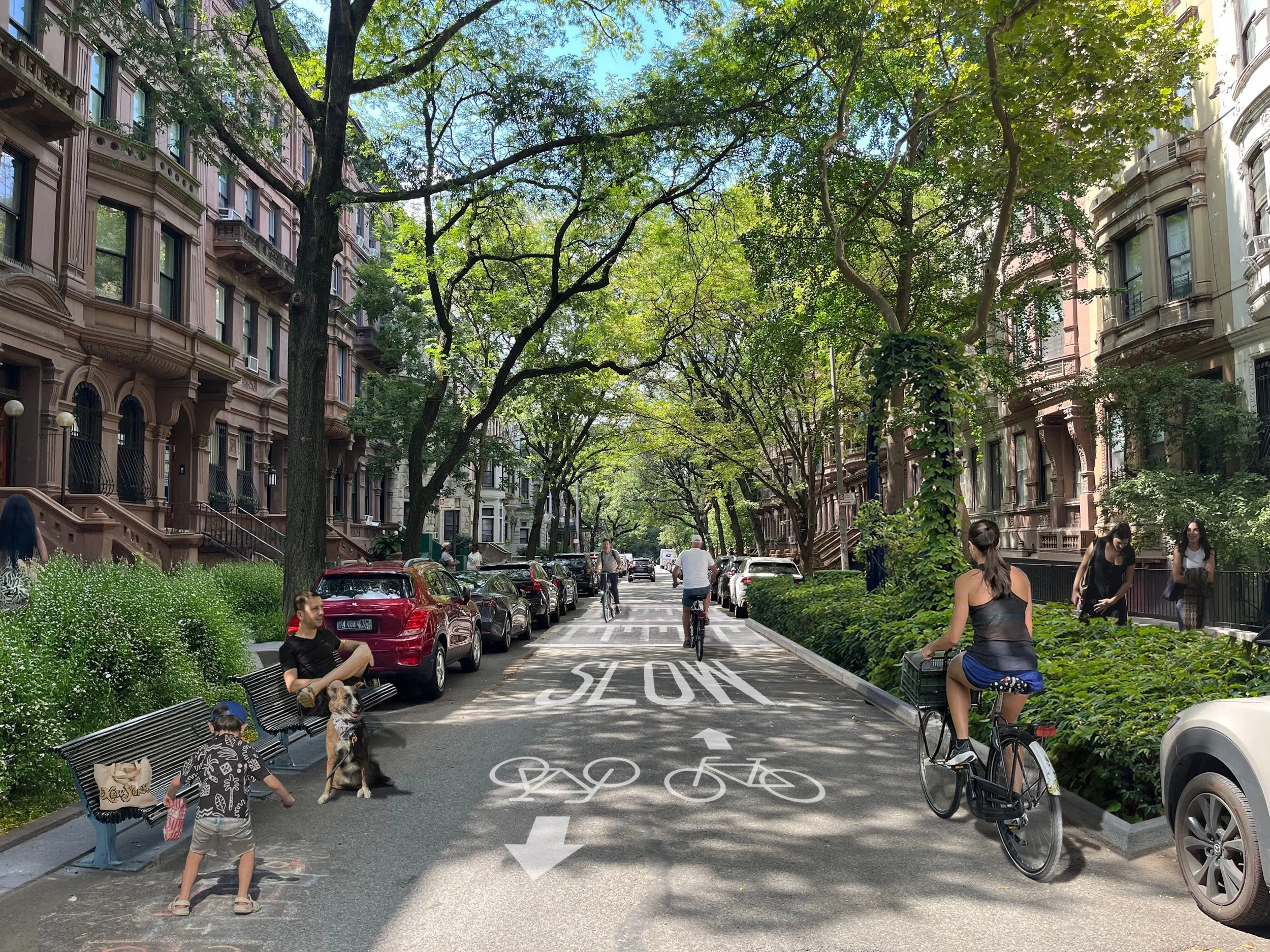
📍 Less traffic, more living. Illustration: StreetopiaUWS
By adjusting street patterns to prevent through traffic on key streets, and redirecting non-local trips to wider boundary roads instead, unnecessary traffic is all but eliminated on the traffic-calmed streets (though full access by motor vehicle is maintained for those that need it).
On the Upper West Side, that might look like alternating the one-way direction of each block on a given crosstown street so drivers are unable to use those streets for through trips and are directed to the avenues and wider crosstown arterials instead. Less traffic means more space for community, greater safety for people walking and biking, and an all around better quality of life for everyone.
The great thing about Low Traffic Neighborhoods is that they’re additive, and the positive effects are cumulative: you can add blocks over time, and the longer they’re in place, the safer and more social they become.
Start with...
The residential cross streets between 86th Street and 96th Street in Community District 7 and a collection of blocks along Convent Avenue in Community District 9.
Learn more: Low-Traffic Neighborhoods
TRANSFORM MOBILITY with a Bike Network
Cycling cities are happier cities. Cleaner air, quieter streets, increased social connection, and safer ways to get around whatever your age or chosen mode. The ingredients for a successful cycling city start with a safe place to ride a bike on every street; regardless of your origin and destination, there’s a way to get where you’re headed without going out of your way or taking unreasonable risks.
In other words, it takes an effective and thoughtful network of street treatments that make cycling a priority.
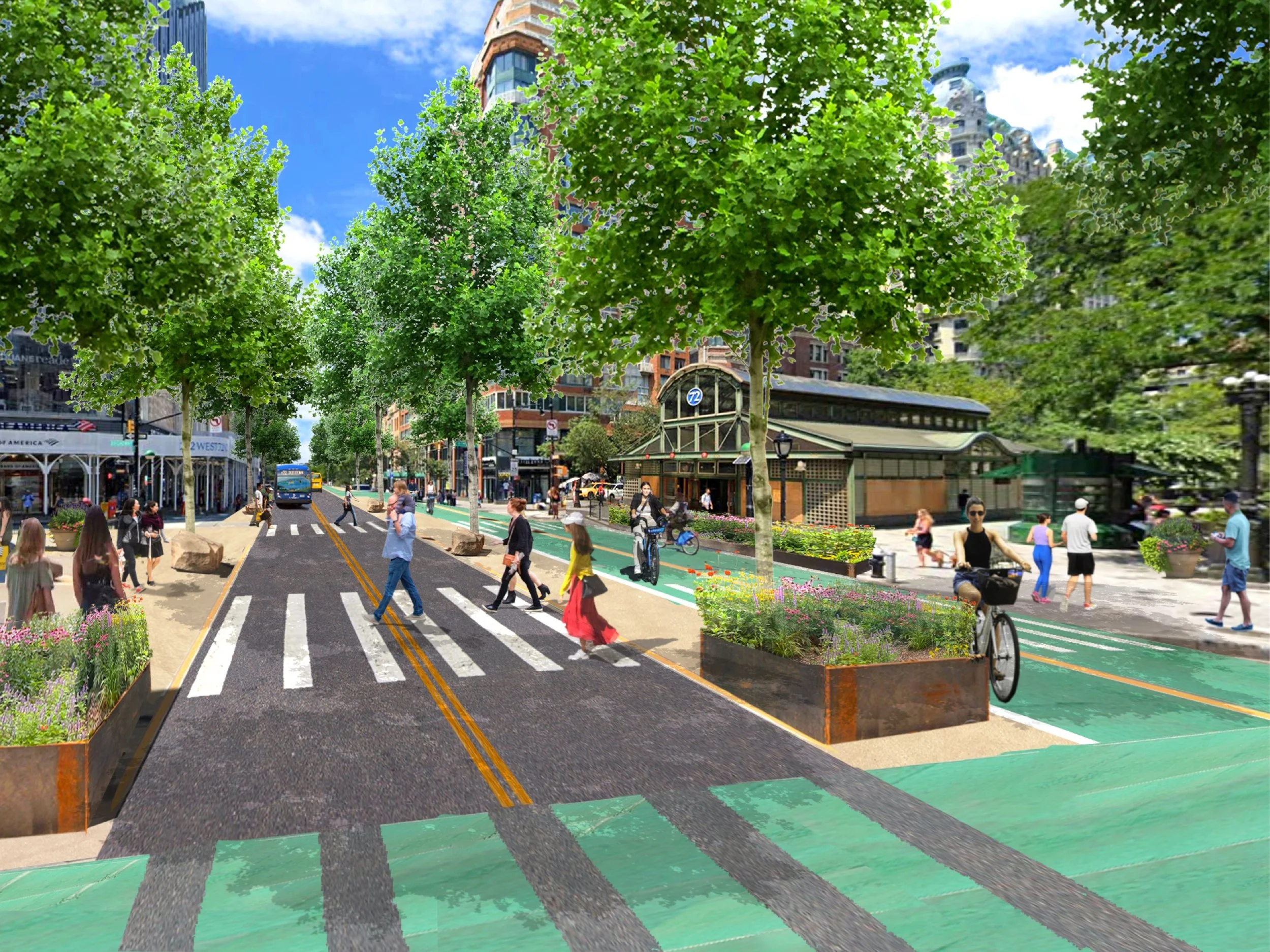
📍 West 72nd Street as it could be. Illustration: StreetopiaUWS
The Upper West Side falls far short of an accessible bike network. In the fifteen years since the first protected bike lane went in on Columbus Avenue, Community District 7 still only has protected bike lanes on just three of its six avenues and none of its crosstown streets. Community District 9 has no protected bike lanes at all.
That makes it pretty hard to get around on a bike. It limits trips and discourages many would-be riders, while reinforcing the dangerous and destructive status quo.
The good news is, a network can scale quickly with enough support. The barriers aren’t technical, or even financial; they’re political, and overcoming that is just a matter of will.
Start with...
Protected crosstown bike connections on 72nd St and 110th St. Both corridors have the support of their respective Community Boards and would immediately be key links in a complete network.
One great thing about these ideas is that they’re complimentary.
School Streets work perfectly with Low-Traffic Neighborhoods. Low-Traffic Neighborhoods provide safe cycling connections as part of a Bike Network. And a Bike Network helps more kids and their parents safely ride to school.
––
Elected officials don’t control the streets, but they can play a key role in the public’s support for change and help make sure local feedback is constructive and meaningful, not simply obstructionist. That’s why it’s so important for Council Member Brewer and Majority Leader Abreu to champion these ideas and make them a priority for their districts.
Imagine an Upper West Side with cleaner air and quieter neighborhoods, comfort and safety when we move around, independence for our kids, community for our seniors, and joy for us all. It’s easy if you try, and 2026 is the year to do it.